Canada Drivers to Face Camera Fines – Canadian drivers are being warned about tougher automated enforcement penalties set to take effect just after Christmas. From December 25, new camera-based traffic fines of up to $425 will begin applying in several urban areas, targeting speeding and red-light violations. The move is part of a broader road-safety push across Canada aimed at reducing accidents during winter and holiday travel periods. With expanded camera coverage and higher penalties, motorists need to understand where the rules apply, how fines are issued, and which cities are enforcing the changes first.
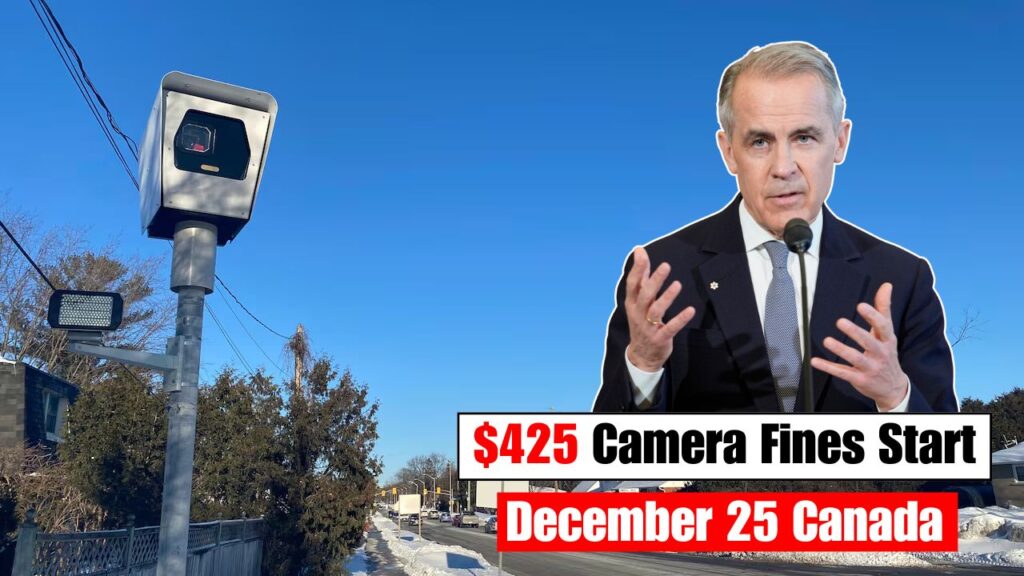
Automated Traffic Camera Fines Roll Out Across Canadian Cities
Automated traffic camera fines are increasing in multiple Canadian cities as local authorities strengthen enforcement through technology. These systems capture speeding and red-light violations without direct police stops, issuing fines directly to registered vehicle owners. Under the updated framework, penalties can reach $425 depending on speed thresholds and local bylaws. Municipal governments across Canada argue that higher fines act as a deterrent, especially in school zones and high-risk intersections. Drivers should note that demerit points typically do not apply, but unpaid fines can still affect vehicle registration renewals. Clear signage is required in most jurisdictions, yet unfamiliar drivers may still be caught off guard.

$425 Speed and Red-Light Penalties Impact Motorists in Provinces Nationwide
The new $425 camera penalties affect motorists in provinces where municipalities have approved higher maximum fines under provincial traffic acts. While not uniform nationwide, the changes reflect a shared goal among provincial governments to curb repeat speeding and intersection violations. Canadian motorists travelling between cities may encounter varying fine levels, making awareness essential. Enforcement agencies emphasize that winter conditions increase stopping distances, raising risks at monitored locations. Payments are typically required within a fixed period, and late fees can apply. Authorities also remind drivers that rental vehicles are included, with fines passed on to renters by rental companies.

| City / Area | Violation Type | Maximum Fine | Start Date |
|---|---|---|---|
| Toronto | Speed Camera | $425 | December 25 |
| Vancouver | Red-Light Camera | $400+ | December 25 |
| Calgary | Speed Camera | Up to $425 | December 25 |
| Ottawa | Community Safety Zones | Up to $425 | December 25 |
What the New Camera Enforcement Means for Drivers in Canada
For drivers across Canada, the expanded camera enforcement means stricter compliance expectations and fewer warnings. Automated tickets are issued regardless of who was driving, placing responsibility on vehicle owners to manage payments or disputes. Canadian road-safety agencies stress that revenue is reinvested into traffic-calming measures, signage, and pedestrian safety upgrades. Critics argue fines disproportionately affect low- and middle-income drivers, while supporters cite data showing reduced collision rates near cameras. Understanding local rules, speed limits, and posted notices is now more important than ever, particularly during holiday travel when enforcement remains active.
How Canadian Municipalities Use Camera Fines to Improve Road Safety
Municipalities across the country use camera-generated fines as part of a broader safety strategy rather than simple punishment. In many Canadian communities, funds support crosswalk upgrades, school-zone monitoring, and public awareness campaigns. Authorities report that collision rates often drop significantly within months of camera installation. Transparent reporting and regular reviews are used to justify placement decisions. Drivers are encouraged to view cameras as preventive tools rather than revenue traps. By adjusting driving habits and respecting posted limits, motorists can avoid fines while contributing to safer roads nationwide.
Frequently Asked Questions (FAQs)

1. When do the $425 camera fines start in Canada?
Most participating cities begin enforcing the higher fines from December 25.
2. Do camera fines add demerit points in Canada?
Generally no, as tickets are issued to the vehicle owner, not the driver.
3. Can drivers dispute an automated camera ticket?
Yes, tickets can usually be challenged through the local municipal court process.
4. Are warning signs required near traffic cameras?
In most Canadian jurisdictions, signage is mandatory before camera zones.